

What Is the Flower of Life? Meaning, Origins & How to Use It
What Is the Flower of Life? Meaning, Origins, and How to Use It
The Flower of Life is one of the most recognizable symbols in sacred geometry. At first glance, it looks simple—overlapping circles arranged in a perfectly balanced pattern. Yet for thousands of years, people across cultures have viewed it as a powerful visual representation of creation, harmony, and the interconnectedness of all life.
Today, the Flower of Life appears everywhere: spiritual art, meditation tools, jewelry, yoga spaces, digital designs, and modern home decor. But what does this symbol actually mean? Where did it come from? And how can you use it in daily life—not just as decoration, but as a meaningful visual language?
This beginner-friendly guide will walk you through the meaning, origins, and practical uses of the Flower of Life in a clear, grounded, and accessible way.
The Basic Structure of the Flower of Life


At its core, the Flower of Life is made from a series of evenly spaced, overlapping circles. Each circle is the same size, and their centers are placed precisely on each other’s circumference.
The most commonly referenced form contains 19 complete circles, arranged in a hexagonal pattern and enclosed within a larger circle. This structure grows outward from a single circle, often called the Seed of Life, which consists of seven circles forming the foundation of the entire pattern.
This precise repetition is not random. The geometry creates a visual rhythm that feels balanced and harmonious to the human eye. Many people describe a sense of calm or focus when looking at the pattern—even without knowing its symbolic meaning.
From a geometric perspective, the Flower of Life demonstrates how complexity can emerge from simplicity. A single circle expands, overlaps, and multiplies—mirroring how life itself grows from a simple origin into infinite forms.
The Meaning of the Flower of Life


The meaning of the Flower of Life is deeply tied to ideas of unity, creation, and interconnectedness. While interpretations vary between traditions, several core themes appear consistently.
1. Unity of All Life
The overlapping circles symbolize how all living things are connected. No circle exists in isolation—each touches and supports the others. This visual metaphor reflects the idea that everything in the universe is part of a single, unified system.
2. Blueprint of Creation
Many spiritual traditions view the Flower of Life as a symbolic “blueprint” from which all forms arise. Within its geometry, other sacred patterns can be found, including the Seed of Life, Vesica Piscis, and Metatron’s Cube.
3. Balance and Harmony
The perfect symmetry of the pattern represents balance between opposites: masculine and feminine, expansion and contraction, chaos and order. This balance is one reason the symbol is often associated with meditation and inner alignment.
4. Infinite Potential
Because the pattern can theoretically expand endlessly, it also symbolizes infinity and the continuous cycle of creation.
Importantly, the Flower of Life does not belong to one religion. Its meaning is universal, allowing people from many belief systems to connect with it in their own way.
Historical Origins Across Ancient Cultures

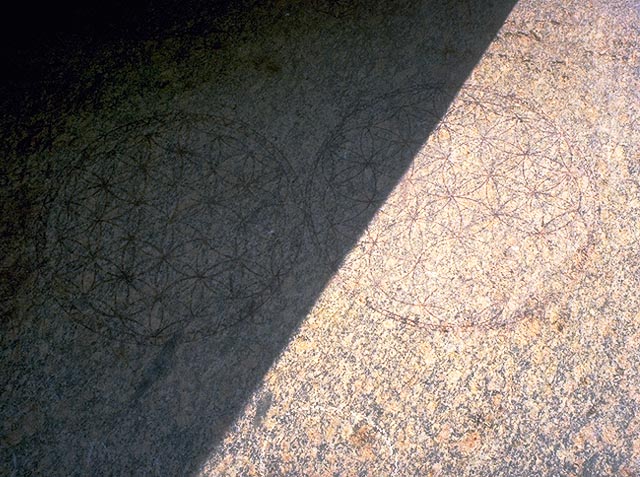

The Flower of Life is not a modern invention. Variations of this pattern appear across ancient civilizations, often carved into stone, drawn in manuscripts, or embedded in architectural design.
Ancient Egypt
One of the most famous examples appears in the Temple of Osiris at Abydos, where Flower of Life patterns are carved into granite pillars. These carvings are believed to be thousands of years old and suggest the symbol held sacred significance.
Ancient Greece
Greek philosophers, including those associated with early mathematical thought, explored geometric harmony as a reflection of cosmic order. While not always named explicitly, Flower of Life–like constructions appear in their studies of proportion and form.
Middle East and Asia
Islamic geometric art frequently uses overlapping circles and repeating patterns similar to the Flower of Life, emphasizing infinity, unity, and divine order. In parts of Asia, similar motifs appear in mandalas and temple art.
Medieval and Renaissance Europe
During the Renaissance, scholars revisited sacred geometry as a bridge between science, art, and spirituality. The Flower of Life was studied as part of this broader exploration of universal design.
Across cultures, the symbol appears not as decoration alone, but as visual philosophy.
Sacred Geometry and the Flower of Life


The Flower of Life is a cornerstone of sacred geometry, a field that explores geometric patterns believed to reflect the fundamental structure of reality.
Within the Flower of Life, several important shapes emerge:
-
Seed of Life – seven circles representing the stages of creation
-
Vesica Piscis – the almond-shaped overlap symbolizing birth and duality
-
Metatron’s Cube – a complex figure containing all five Platonic solids
These forms appear in nature, from crystal structures to plant growth patterns. Sacred geometry suggests that the same mathematical principles shape both the microscopic and cosmic worlds.
For many people, the Flower of Life serves as an accessible entry point into sacred geometry because it visually contains so much within a single, elegant pattern.
How to Use the Flower of Life in Everyday Life
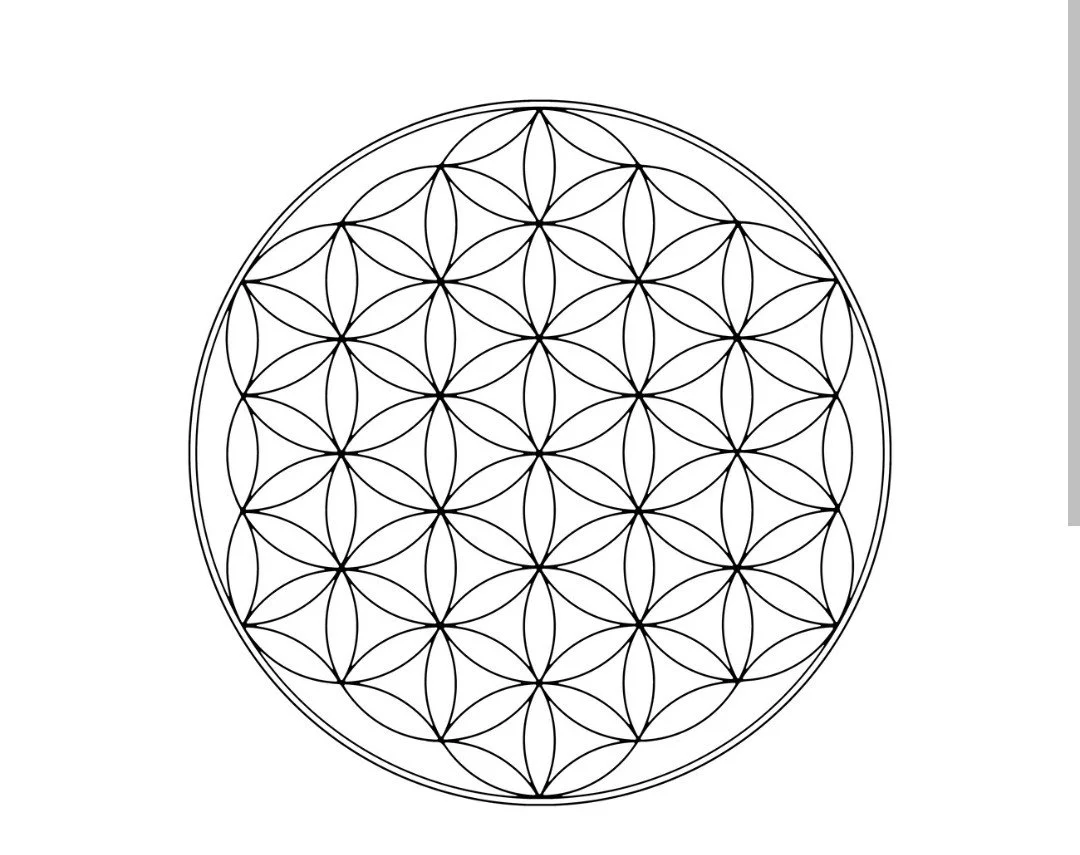

The Flower of Life is not just something to admire—it is often used intentionally in daily practices.
1. Meditation and Mindfulness
Many people meditate while focusing on the Flower of Life. The symmetry helps calm the mind, while the repeating pattern encourages steady breathing and concentration.
You can:
-
Gaze softly at the pattern during meditation
-
Visualize it expanding and contracting with your breath
-
Place it beneath a candle or crystal as a focal point
2. Energy and Space Clearing
Some believe the Flower of Life helps harmonize energy in a space. It is commonly placed in meditation rooms, yoga studios, or workspaces to promote balance and clarity.
3. Creative Inspiration
Artists, designers, and makers often use the Flower of Life as a creative framework. Its geometry provides structure while allowing endless variation.
4. Personal Symbolism
Wearing or displaying the Flower of Life can serve as a personal reminder of interconnectedness, growth, and inner alignment—whether or not you follow a spiritual practice.
The Flower of Life in Modern Art and Design
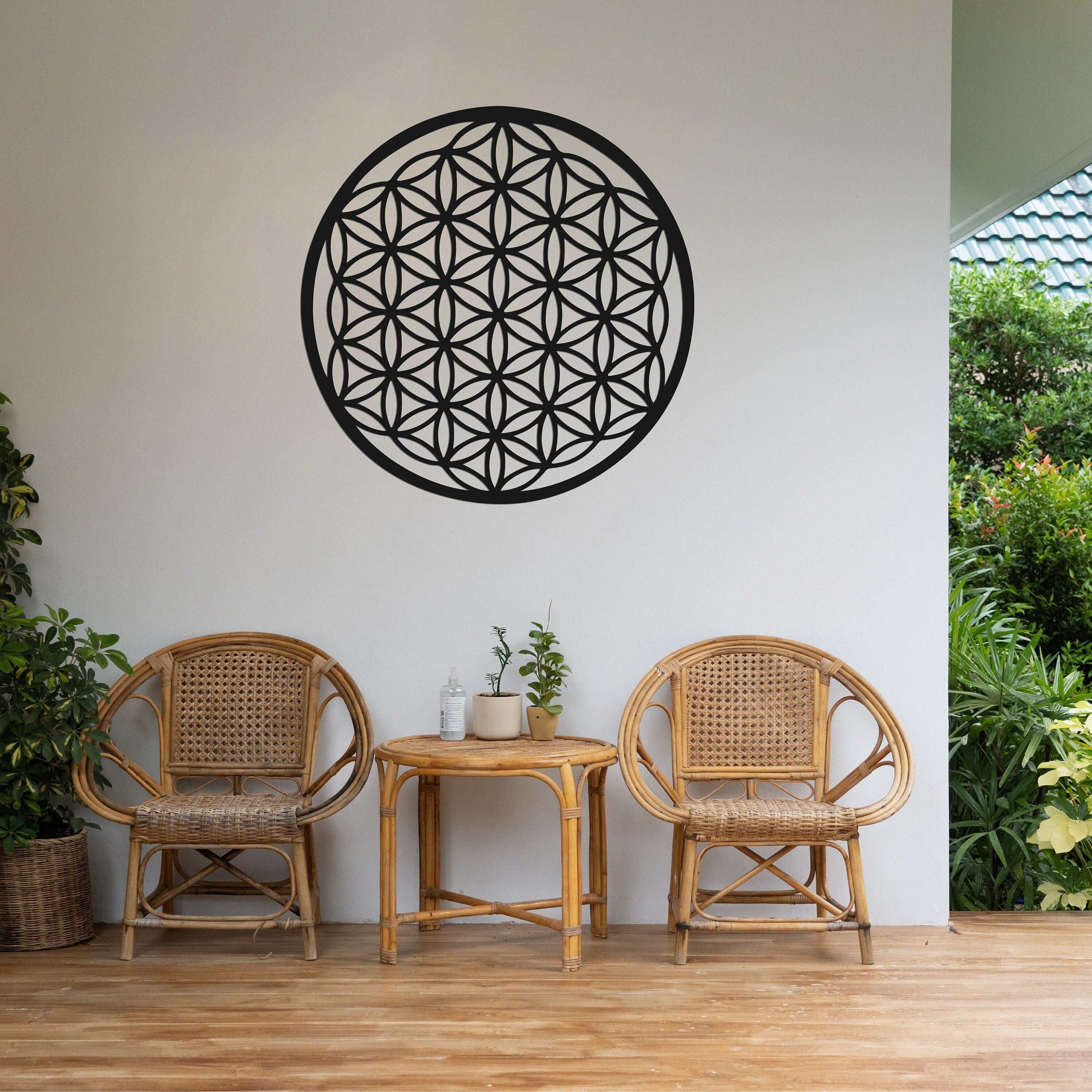

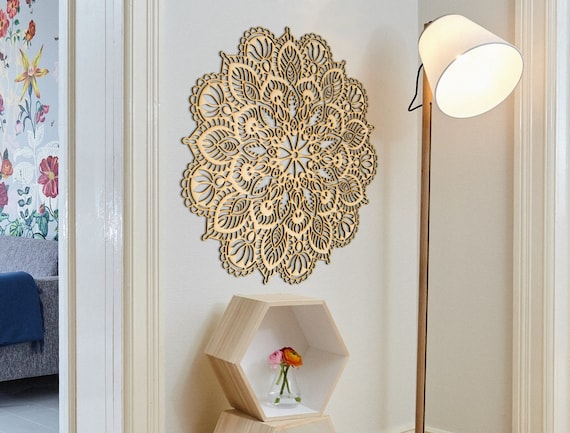
In modern times, the Flower of Life has found a strong presence in art, fashion, and interior design.
-
Wall art and tapestries bring a sense of calm geometry into living spaces
-
Digital patterns are used in textiles, journals, and creative projects
-
Jewelry and accessories offer subtle symbolic expression
-
Yoga and wellness products integrate the symbol into daily rituals
Its popularity today reflects a growing desire for designs that feel meaningful, not just decorative.
Is the Flower of Life Religious?
This is a common question. The short answer is: no, but it is spiritual.
The Flower of Life is not tied to a specific doctrine, god, or religious rule. Instead, it functions as a universal symbol—one that different cultures and individuals interpret through their own lenses.
For some, it represents divine creation. For others, it is a visual expression of mathematical beauty or natural order. Many people simply appreciate it as a calming, harmonious design.
Its openness is part of what makes it so enduring.
Why the Flower of Life Still Matters Today
In a fast-paced, fragmented world, the Flower of Life offers a visual reminder of wholeness.
It suggests that:
-
Complexity grows from simple beginnings
-
Everything is connected, even when it appears separate
-
Balance and beauty can exist within structure
Whether you approach it through spirituality, art, or curiosity, the Flower of Life invites you to slow down and observe the patterns beneath the surface of everyday life.
Final Thoughts
The Flower of Life is more than an ancient symbol—it is a living pattern that continues to inspire, calm, and connect people across cultures and generations.
By understanding its meaning, appreciating its origins, and exploring how to use it intentionally, you can engage with the symbol in a way that feels personal and grounded.
Whether displayed in your home, used in meditation, or incorporated into creative work, the Flower of Life remains a timeless expression of harmony and unity—one that still speaks clearly in the modern world.